

Technology has become an inseparable part of our lives, changing the way we work, communicate, learn, and spend our free time. Smartphones, online services, smart home systems, and artificial intelligence have firmly embedded themselves into our daily routines. We wake up to a phone alarm, ask a voice assistant to turn on the lights, and order a ride through an app — technology largely defines the rhythm of modern life.
That said, its role is hard to reduce to a simple “good” or “bad.” When examining the impact of modern technology on people, we can point to real benefits — saving time, quick access to information, new ways to connect and learn — but also to genuine downsides, like the pressure to always be online, information overload, and reduced physical activity.
So as digital devices take up more and more space in our everyday lives, a natural question arises: does technology always actually make our lives better?
Let’s take a closer look at both the positive and negative effects of technology on individuals and society.
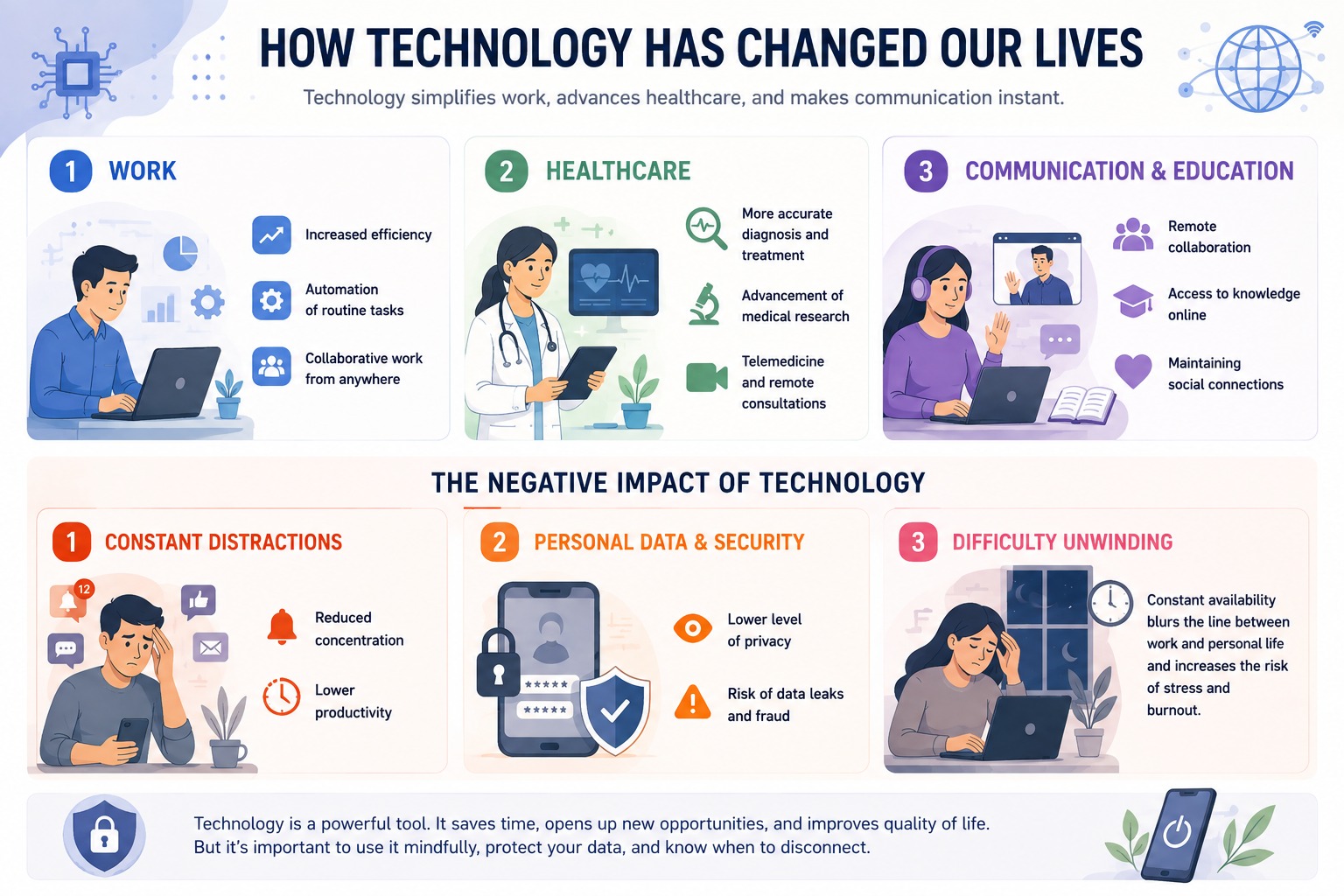
How technology has changed our lives
Technological progress has streamlined workflows, expanded the possibilities of medicine, and made communication nearly instantaneous.
1. Work
One of the clearest ways to see how technology affects our lives is in the workplace — not just in the tools we use, but in the way many processes are organized altogether:
- Greater efficiency. Tasks that once took hours or days can now be completed far more quickly, saving time and boosting productivity.
- Modern software handles many routine operations — processing documents, running calculations, analyzing large datasets, and generating reports.
- Email, messaging apps, cloud services, and video conferencing allow teams to work together effectively, regardless of where they’re located.
2. Healthcare
Healthcare is one of the most important areas where modern technology has made a real difference:
- More accurate diagnosis and treatment. Advanced equipment and software systems help doctors identify conditions more quickly and choose the most appropriate course of treatment.
- Advances in research. Computing technology accelerates data processing, drug development, and the discovery of new therapies.
- Remote consultations allow patients to see a doctor without visiting a clinic in person — a particularly valuable option for people in rural areas or places where access to specialists is limited.
3. Communication and education
The internet has significantly reduced the distance between people:
- Remote collaboration. Colleagues from different cities and countries can work on projects simultaneously, hold video meetings, and share documents in real time.
- Access to knowledge. Online courses, digital libraries, and educational platforms make it possible to learn new skills from virtually anywhere in the world.
- Staying connected. Messaging apps and video calls make it easy to keep in touch with friends and family, even when thousands of miles apart.
The downsides of technology
When you look at how modern technology affects our lives, the picture is more nuanced. Take the smartphone, for example — it can be a work tool, a way to stay in touch, and a source of entertainment, all at once. But it also creates more opportunities to get distracted, stay connected after hours, or share personal data with digital services.
1. Constant distractions
- Difficulty focusing. Notifications, messages, and social media constantly compete for our attention, making it harder to stay focused on a single task for an extended period.
- Reduced productivity. Endlessly scrolling through feeds and constantly checking messages eats into time and disrupts work. The habit of always being reachable also makes it harder to truly unwind.
2. Personal data and security
- Reduced privacy. Purchases, search history, website visits, and social media activity all leave a digital footprint. The data collected can be used to personalize services and target advertising.
- Risk of data breaches. Personal and financial information is valuable to bad actors. A breach can lead to financial fraud, compromised accounts, and other serious consequences.
3. Difficulty switching off
The constant availability of messaging apps and email gradually blurs the line between work time and personal time. It becomes harder to mentally step away and recharge. When this state persists over time, the risk of chronic stress and burnout increases.
Modern technology can’t be labeled as purely beneficial or purely harmful. Its impact largely depends on how a person chooses to use it. Digital tools can save time, expand possibilities, and improve quality of life — but they also call for a thoughtful approach, attention to digital security, and the ability to disconnect when it matters.