
As businesses and society rely more on digital technology, cybersecurity becomes more important. At the same time, cyber threats are growing and becoming harder to detect. Many companies also lack skilled security experts. Because of this, organizations need a practical approach to protecting data, systems, and digital services.
One of the biggest risks is still the human factor. Weak passwords, phishing emails, poor system settings, and slow responses can all lead to security incidents. Even strong technology cannot fully protect a company if employees ignore basic security rules. Cybersecurity is therefore not only about new tools. It also requires clear processes, regular staff training, and automation of routine tasks.
Technologies changing cybersecurity
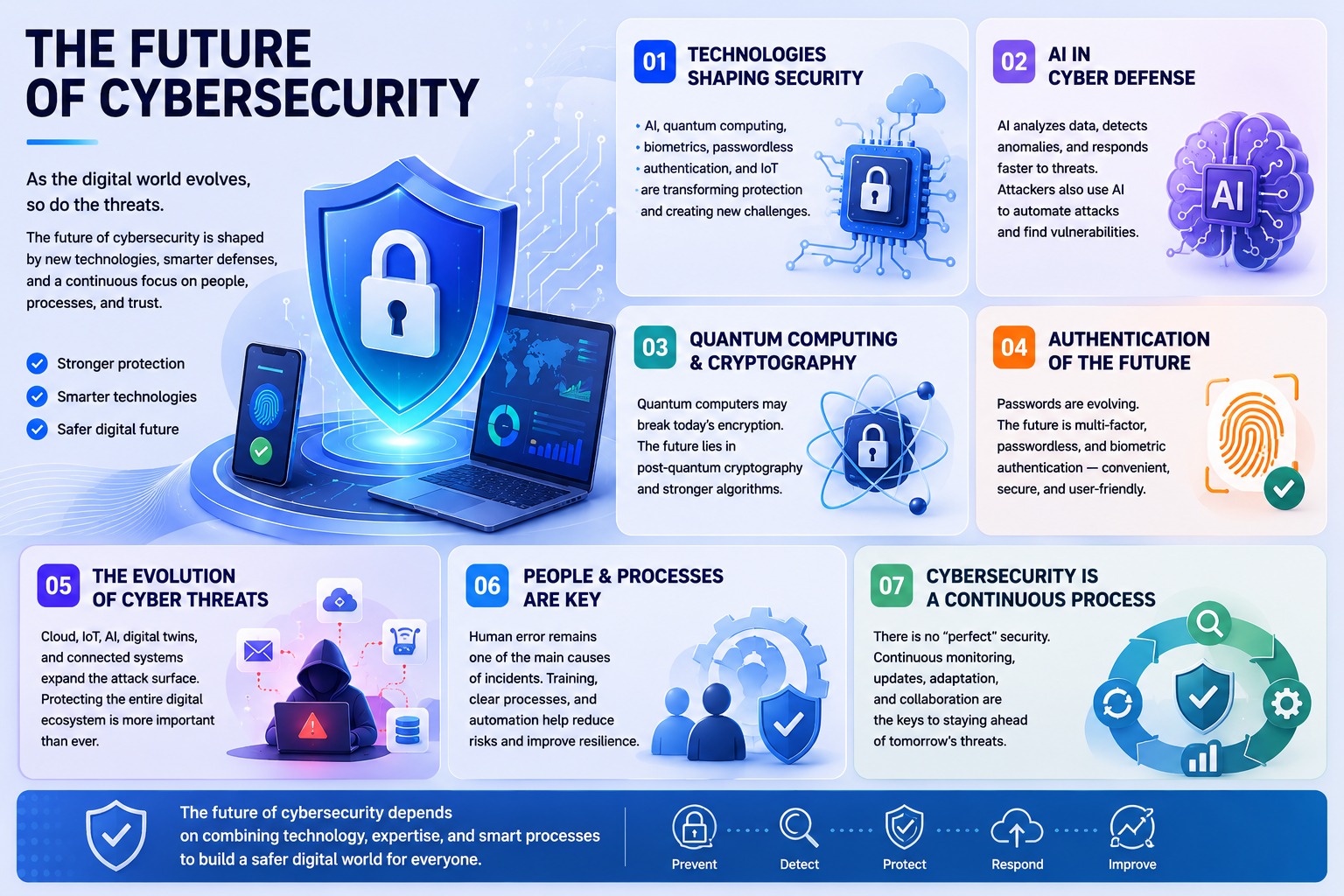
Several technologies are reshaping the industry. AI, quantum computing, biometrics, passwordless login, and connected devices are changing how companies manage security. These tools can improve protection, but they can also create new risks.
Artificial intelligence in cyber defense
AI is becoming an important part of cybersecurity. It can process large amounts of data, detect unusual activity, and help security teams react faster. Machine learning systems can monitor networks, compare normal and suspicious behavior, and warn specialists about possible attacks.
However, attackers also use AI. They can create realistic phishing messages, automate attacks, and search for weak points more quickly. Security teams must therefore use AI carefully while preparing for threats that are also powered by AI.
Quantum computing and cryptography
Quantum computing may change the future of encryption. Powerful quantum computers could break some methods that protect data and digital signatures today. These systems are not yet a common threat, but the risk cannot be ignored.
This is why post-quantum cryptography is becoming more important. It uses algorithms designed to resist future quantum attacks. Companies should review their current encryption, identify systems that may become vulnerable, and prepare a long-term plan for upgrades.
Passwords, biometrics, and authentication
Passwords are still widely used, but their role is changing. Multi-factor authentication, passkeys, hardware security keys, and biometric tools are becoming more common. These methods can make login easier and safer.
Biometrics, however, create privacy concerns. A stolen password can be replaced. A fingerprint or face scan cannot. Companies must therefore protect biometric data with the same care as other sensitive information.
A wider threat landscapes
New security tools cannot remove every risk. As technology develops, attackers also improve their methods. Cloud platforms, Internet of Things devices, AI systems, digital twins, and virtual environments create more possible entry points.
Organizations must now protect their entire digital environment. This includes user accounts, cloud systems, mobile devices, remote workers, supply chains, and connected services. Security teams must understand how these systems interact, because one weak link can affect the whole network.
Cybersecurity is an ongoing process
No system is completely secure. Even advanced tools need regular updates, correct settings, testing, and strong internal policies. Companies must review risks often and respond quickly when new threats appear.
The future of cybersecurity will depend on several elements working together. Automation can reduce routine work. AI can improve threat detection. Modern encryption can protect sensitive data. Skilled professionals can make better decisions when technology alone is not enough.
There is no single solution that can stop every cyberattack. The best strategy is to combine technology, good processes, and human expertise. Organizations that identify risks early, train their teams, and adapt to change will be better prepared for future cyber threats.